He was twenty years old when he became king of Macedon.
He was twenty-two when he crossed into Asia with an army of around 40,000 men and set out to conquer the Persian Empire, the largest empire the world had ever seen.
He was thirty-two when he died in Babylon, having never lost a battle.
Alexander III of Macedon, known to history as Alexander the Great, compressed more conquest, strategy, and catastrophe into a single life than almost any figure in recorded history. What he built did not survive him. What he changed never went back.
The Making of a Conqueror
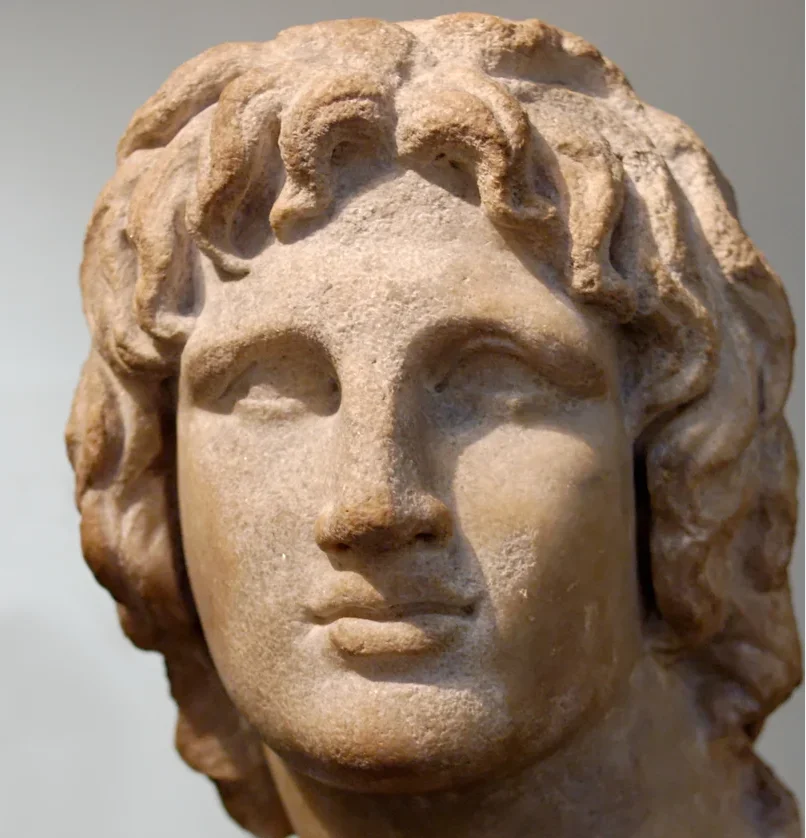
Alexander was the son of Philip II of Macedon, one of the great military innovators of the ancient world. Philip transformed Macedon from a minor kingdom into the dominant power in Greece. He also hired Aristotle to educate his son.
Alexander grew up sleeping with a copy of the Iliad under his pillow, annotated by Aristotle. He identified with Achilles. He wanted to be the greatest warrior who ever lived, and he was given both the education and the army to try.
When Philip was assassinated in 336 BC, Alexander was twenty. He executed the conspirators, suppressed revolts across Greece and the Balkans within two years, then turned east.
The Persian Empire
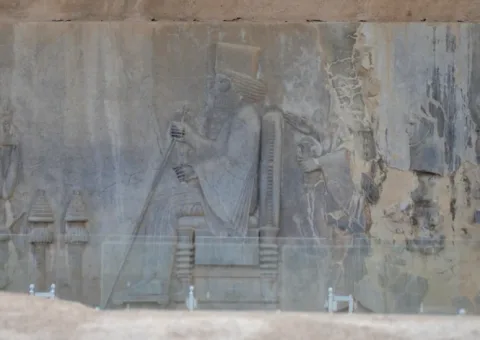
The Persian Empire under Darius III was immense: it stretched from modern Turkey through Egypt, through Persia, to the borders of India. Its armies could field hundreds of thousands of soldiers.
Alexander had forty thousand.
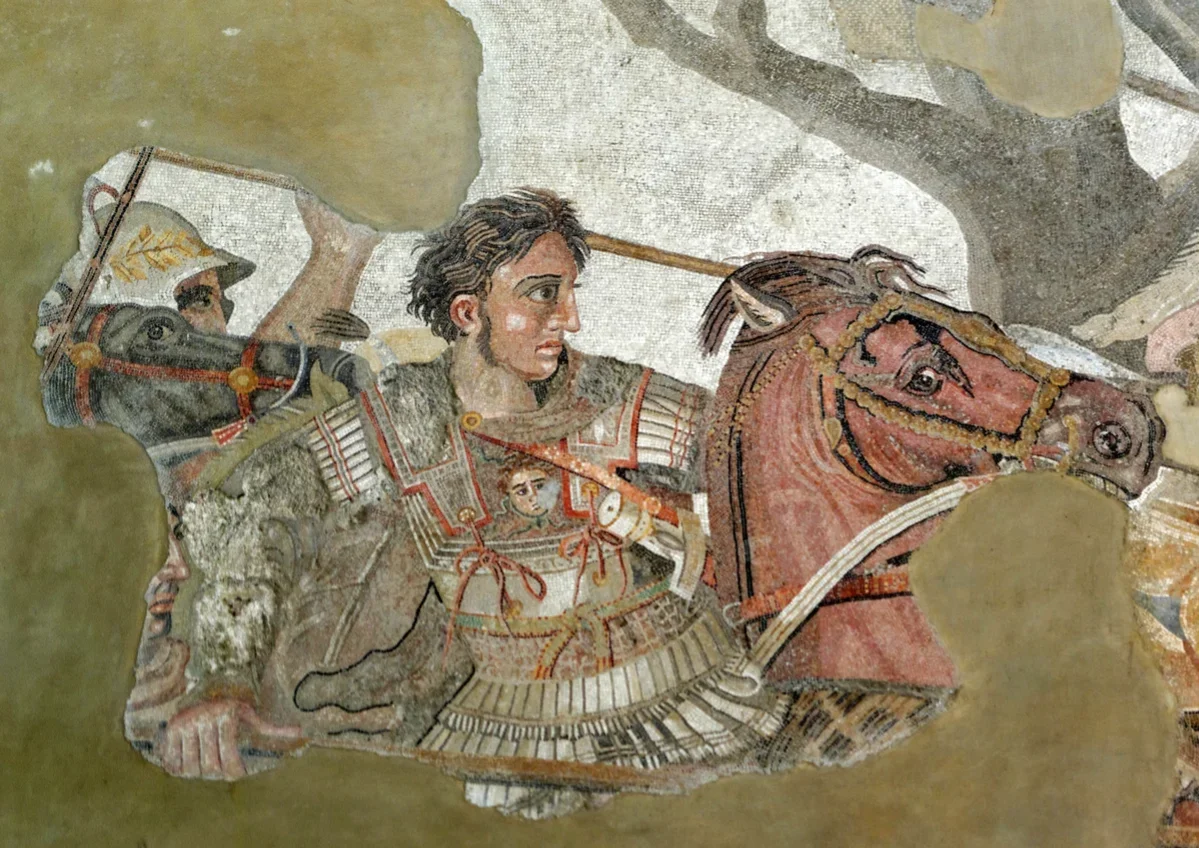
He crossed the Hellespont into Asia in 334 BC. At the Battle of the Granicus he defeated a Persian force and opened Asia Minor. At the Battle of Issus in 333 BC, he met Darius himself on the field.
Darius had numerical advantage. He had the high ground. He had time.
Alexander attacked directly, leading the cavalry charge himself, aimed straight at Darius's position. When Darius fled the field, the Persian army collapsed. Alexander captured Darius's family, including his mother, wife, and children, and treated them as royalty.
Egypt and the Oracle
Alexander did not pursue Darius immediately. He turned south, taking the Phoenician coast and Egypt. Egypt surrendered without significant resistance. He founded the city of Alexandria on the Egyptian coast, which would become one of the greatest cities of the ancient world.
He visited the Oracle of Siwa in the desert, where the priests recognized him as a son of Amun, the Egyptian equivalent of Zeus. He may have believed it. From this point he consistently associated himself with divinity.
The Fall of Persia
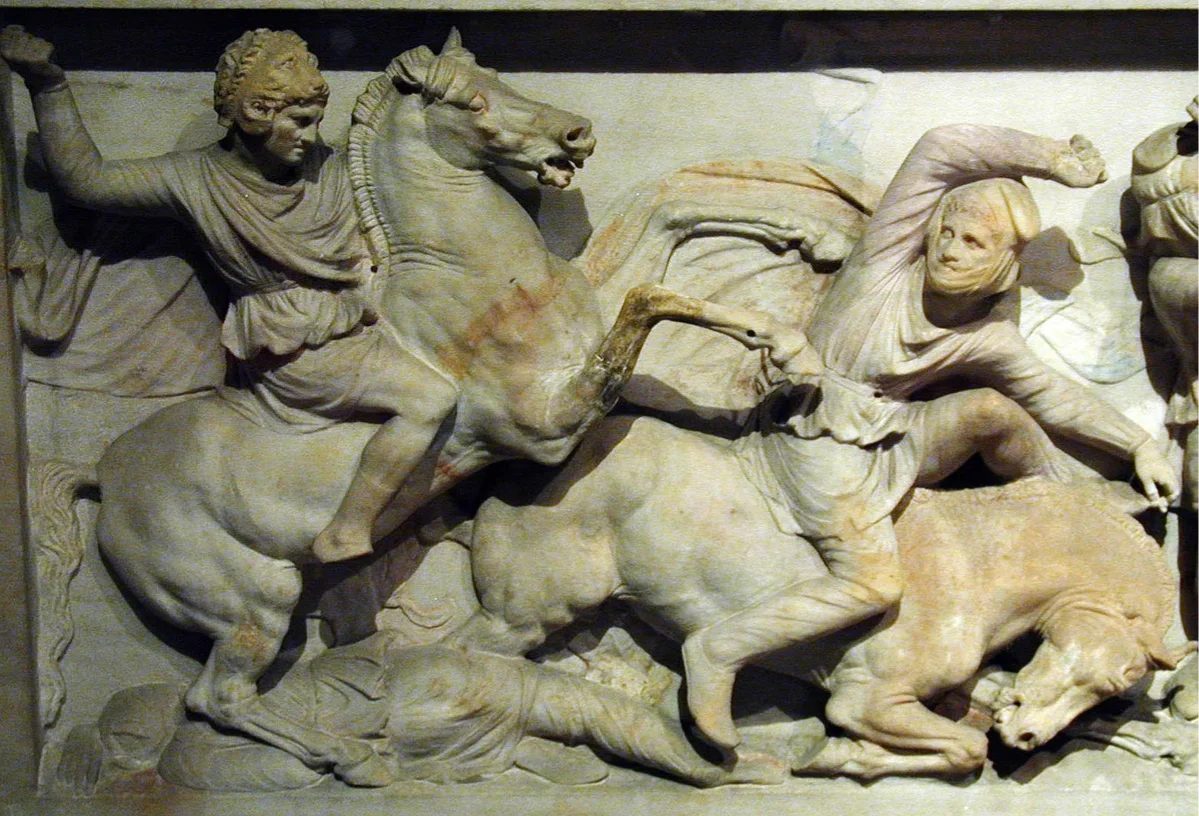
The final confrontation with Darius came at the Battle of Gaugamela in 331 BC. Darius had prepared the battlefield for his war chariots and elephants. He had a significantly larger army.
Alexander won again, using the same tactic: a feint that opened a gap in the Persian line, then a direct cavalry charge aimed at Darius. Darius fled again. His own commanders assassinated him shortly after.
Alexander entered Persepolis, the Persian capital, and burned the great palace, possibly in deliberate symbolic revenge for the Persian burning of Athens 150 years earlier. He now styled himself King of Asia.
The March East
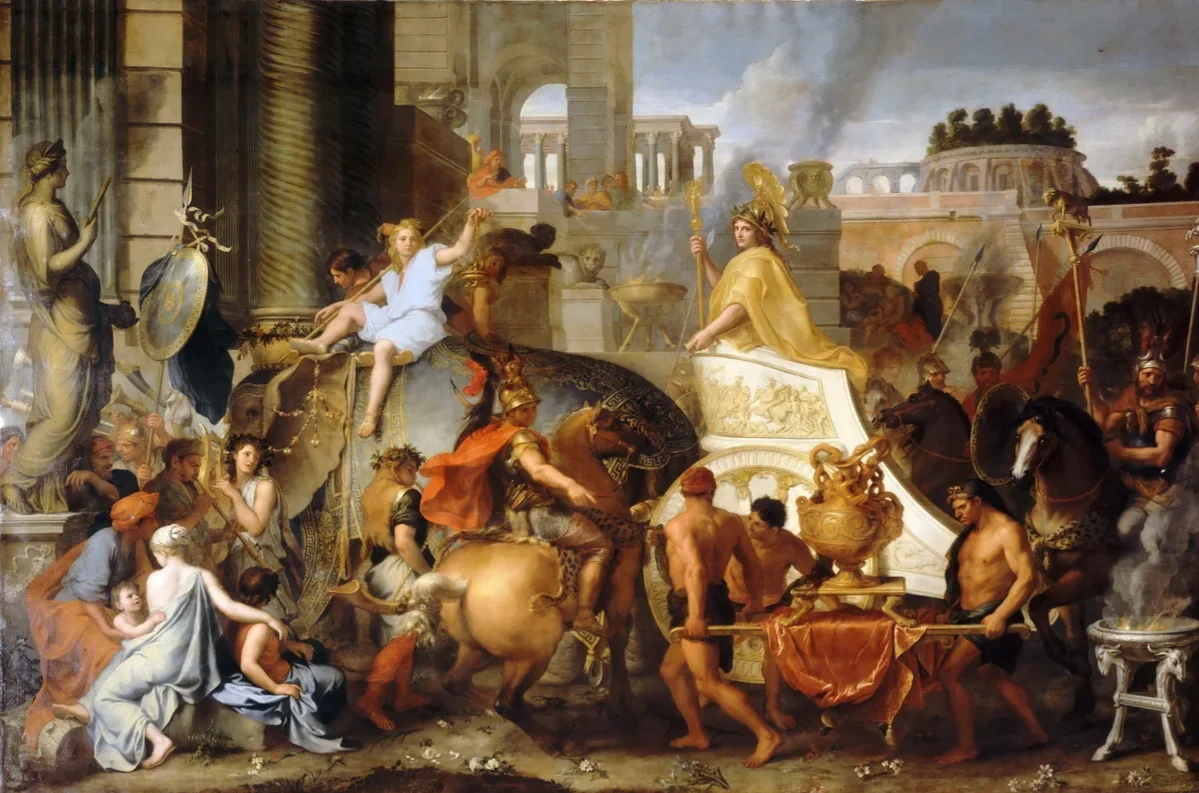
He kept going. He marched through Central Asia, through Bactria and Sogdia, fighting guerrilla wars in terrain his army had never encountered. He founded cities along the route, many of them named Alexandria. He married Roxana, a Bactrian princess, in what appears to have been a genuine attachment.
He crossed the Hindu Kush into India and defeated King Porus at the Battle of the Hydaspes in 326 BC. After the battle, he returned Porus's kingdom to him as a client state, an act of calculated generosity.
His army stopped him at the Hyphasis River. They had been marching for eight years. They would go no further. For the first time in his life, Alexander faced something he could not defeat: the collective refusal of the men who had carried him this far.
He turned back.
The End in Babylon
He returned to Babylon, planning his next campaign. He intended to sail around Arabia and conquer the Arabian Peninsula. He was reorganizing his empire, integrating Persian nobles into the Macedonian command structure in a way that caused deep resentment among his generals.
In June 323 BC, he fell ill after a banquet. He declined rapidly over eleven days. When his generals asked him on his deathbed to whom he was leaving his empire, his reported answer was: to the strongest.
He was thirty-two years old.
His generals promptly went to war with each other. Within forty years, the unified empire he had built had fractured into several competing kingdoms. His son was murdered before adulthood. His mother, his wife, and virtually everyone close to him was killed in the wars that followed.
Why Alexander Still Matters
Alexander did not simply conquer. He spread Greek culture, language, and institutions across an enormous swath of Asia. The Hellenistic period that followed shaped the culture of the ancient Near East for centuries. Greek became the common language of commerce and scholarship from Egypt to Afghanistan. The New Testament was written in it.
He was ruthless, often cruel, and prone to decisions that cost thousands of lives. He was also one of the most brilliant military commanders in recorded history, a genuinely curious intellectual who brought scientists and scholars on campaign, and a man who, at his best, believed that the peoples he conquered deserved a place in what he was building.
Whether that makes him great is a question history has never stopped arguing about.
Sources
Wikipedia, Alexander the Great: https://en.wikipedia.org/wiki/Alexander_the_Great
Wikipedia, Battle of Issus: https://en.wikipedia.org/wiki/Battle_of_Issus
Wikipedia, Alexander the Great in Afghanistan: https://en.wikipedia.org/wiki/Alexander_the_Great_in_Afghanistan