Thousands of years before anyone talked about rage-quitting, Achilles did it on the grandest possible stage.
He was the greatest warrior of the ancient world. He was also the angriest, the most stubborn, and arguably the one who nearly lost the entire war for his side. His story, told in Homer's Iliad, is not a simple hero tale. It is a portrait of brilliance, grief, and the price of pride.
Born to Be Invincible
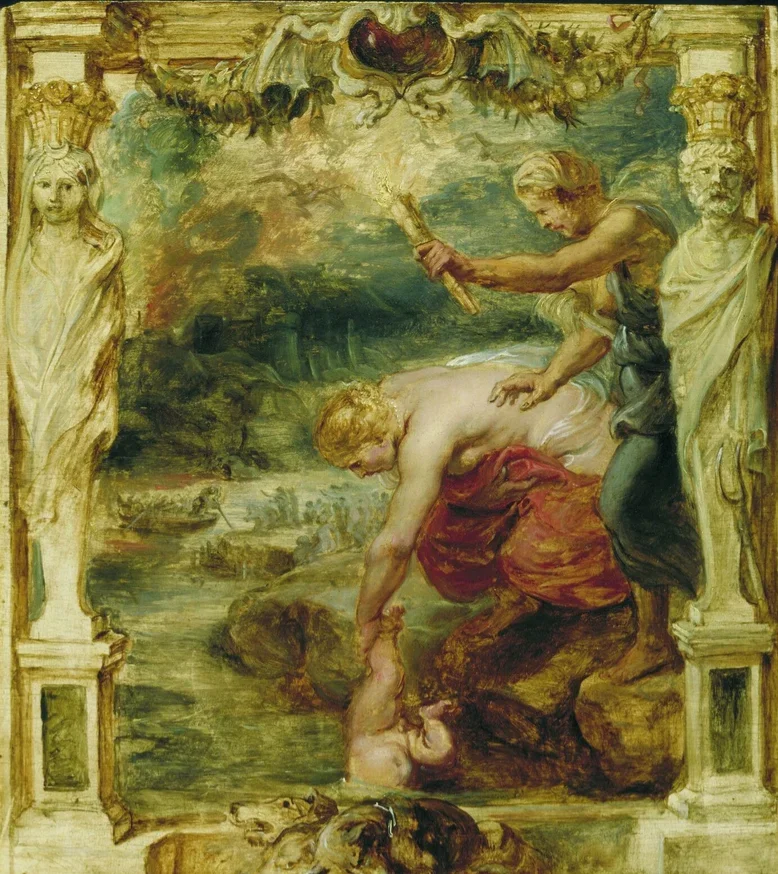
Achilles was the son of Peleus, a mortal king, and Thetis, a sea goddess. His mother knew from the beginning that he was destined to die young. Determined to protect him, she carried the infant Achilles to the River Styx, the boundary between the living world and the land of the dead, and dipped him in its waters.
The Styx granted invulnerability to anything it touched. But Thetis had to hold him somewhere. She gripped him by his heel, and that spot never touched the water. It remained the one place on his body where he could be wounded.
This is the origin of the phrase Achilles heel: a single hidden weakness in an otherwise perfect warrior.
The Greatest Fighter at Troy
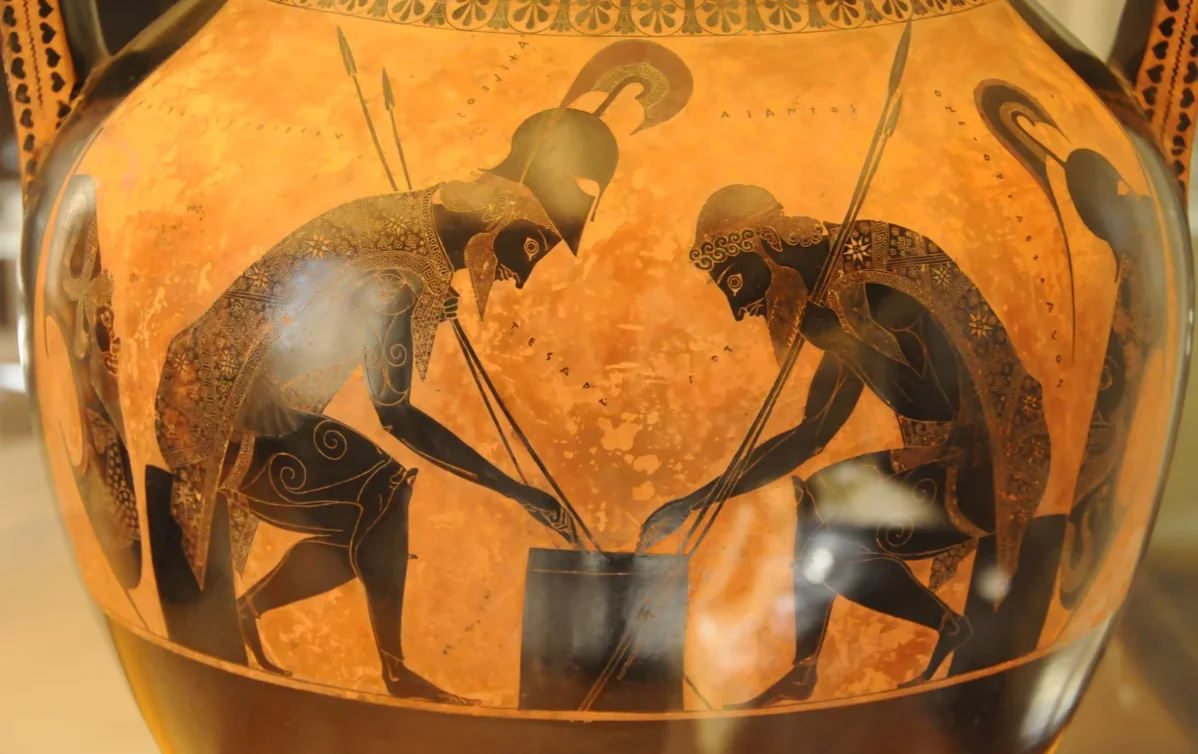
When the Greeks sailed to Troy to retrieve Helen, Achilles came with his Myrmidons, the finest soldiers in Greece. He was not a general, not a king, not a strategist. He was a fighter, and in that role he was unmatched.
For nine years, the war dragged on. Achilles led raid after raid on the surrounding cities and territory. The Trojans feared him so much that their greatest hero, Hector, refused to fight in the open while Achilles was active on the battlefield.
The Wrath That Nearly Destroyed Everything
The crisis of the Iliad begins not with a battle but with an argument over a slave girl.
Agamemnon, the king of Mycenae and leader of the Greek army, took the captive Briseis from Achilles. It was not really about the girl. It was about honor, status, and what it meant to be the greatest warrior on the field. Achilles felt publicly humiliated by the commander he had served faithfully for nine years.
He withdrew from the battle entirely. He sat in his tent by the shore and refused to fight.
Without him, the Greeks suffered catastrophic losses. Hector drove them back to their ships. They were nearly destroyed.
The Death of Patroclus
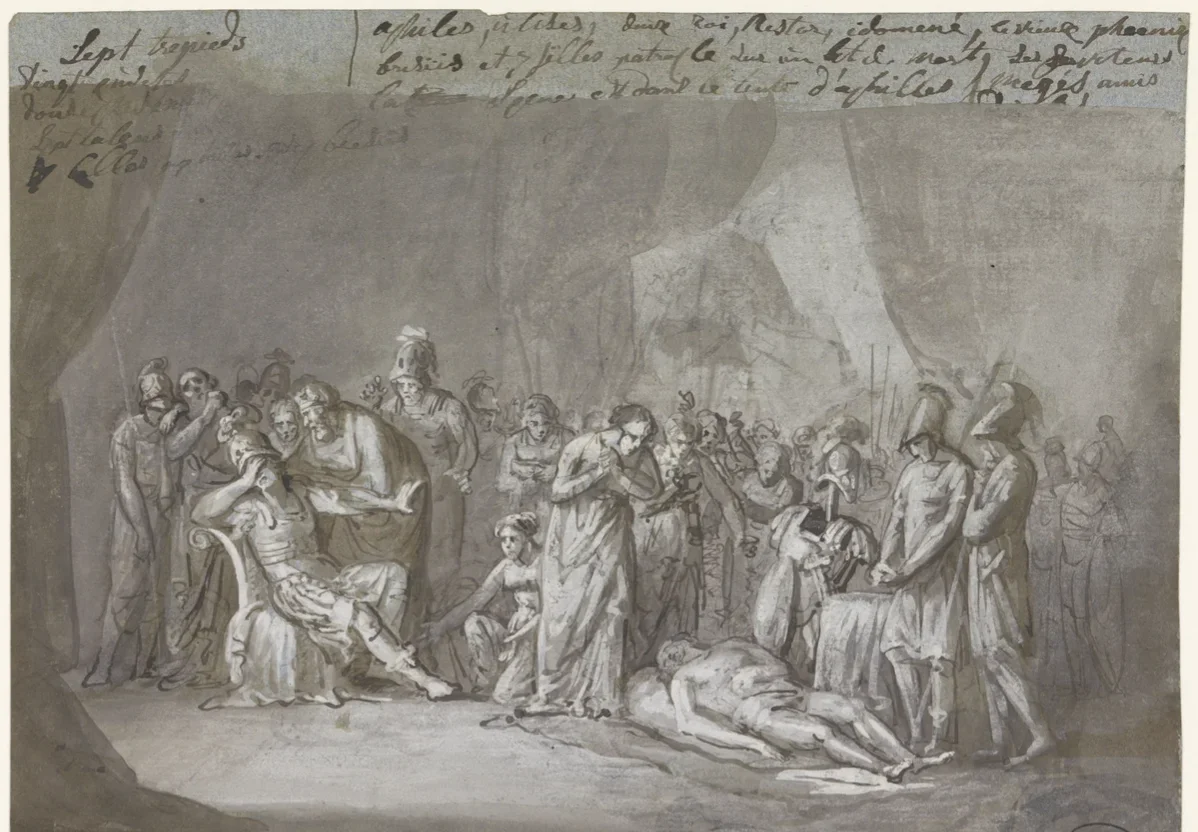
Achilles still would not fight. But his closest friend, Patroclus, could not bear to watch the Greeks losing. He begged Achilles to let him wear his armor into battle, so the Trojans would think Achilles had returned.
Achilles agreed, with strict instructions: drive them back from the ships, but do not pursue them to Troy.
Patroclus forgot the warning, or ignored it. He drove the Trojans back and kept going. At the walls of Troy, the god Apollo struck his armor from his body, and Hector killed him.
The news destroyed Achilles.
His grief was absolute and terrifying. He wept on the beach. His mother Thetis rose from the sea to hold him. All the pride and stubbornness that had kept him from the battle vanished in an instant. He had one goal now: kill Hector.
The Killing of Hector
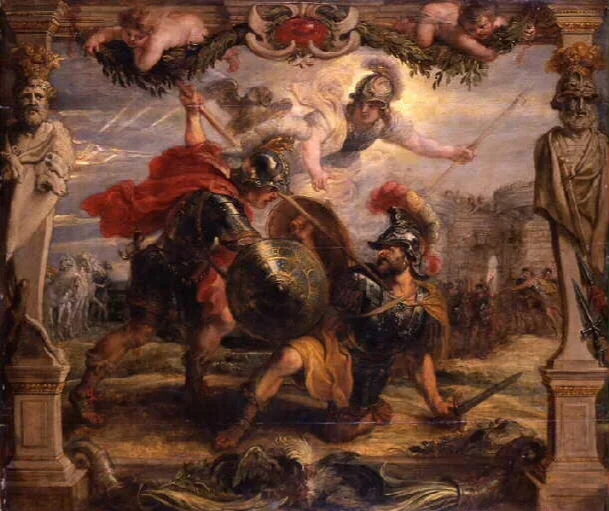
Achilles returned to battle wearing new divine armor forged by the god Hephaestus. The Trojans fled at the sight of him. Even Hector finally ran.
Three times Hector fled around the walls of Troy with Achilles chasing him. Then Hector stopped and faced him.
The fight was brief. Achilles drove his spear through the gap in Hector's armor at the throat. Hector died asking that his body be returned to his family. Achilles refused.
For days, Achilles dragged Hector's body around the walls of Troy behind his chariot. Only when Hector's father, King Priam, came alone to the Greek camp to beg for his son's body did Achilles relent. That scene of an old man weeping at the feet of the man who killed his son is one of the most powerful moments in all of ancient literature.
The End
Achilles knew he would not survive the war. His mother had told him so, and he had chosen to come anyway.
He was killed not long after Hector's funeral. Paris, Hector's younger brother, fired an arrow guided by Apollo. It struck Achilles in the heel, the one place the River Styx had not touched.
Legacy
Achilles was not a simple hero. He was not particularly moral, not especially wise, and arguably responsible for more Greek deaths than any Trojan general. He was a force of nature, defined by extremes: the greatest fighter, the worst temper, the most consuming grief, the most complete loyalty to those he loved.
That contradictory humanity is why his story has survived 3,000 years.
Sources
Wikipedia, Achilles: https://en.wikipedia.org/wiki/Achilles
Homer, The Iliad: https://en.wikipedia.org/wiki/Iliad
Wikipedia, Patroclus: https://en.wikipedia.org/wiki/Patroclus