The war was over. Troy had fallen. All the Greek heroes sailed for home.
Most of them arrived within weeks. Odysseus took ten years.
He was not unlucky. He was everything that makes a great story: clever, stubborn, beloved by one goddess and hunted by another, a man who made brilliant decisions and terrible ones, who lost every companion he had and still kept going.
His story, told in Homer's Odyssey, is not really about getting home. It is about what a person will endure to get there.
The Trick That Ended the War
Odysseus was not the greatest fighter at Troy. That was Achilles. He was not the most powerful king. That was Agamemnon. What he was, was the cleverest man in the Greek army, and in the end, cleverness won the war.
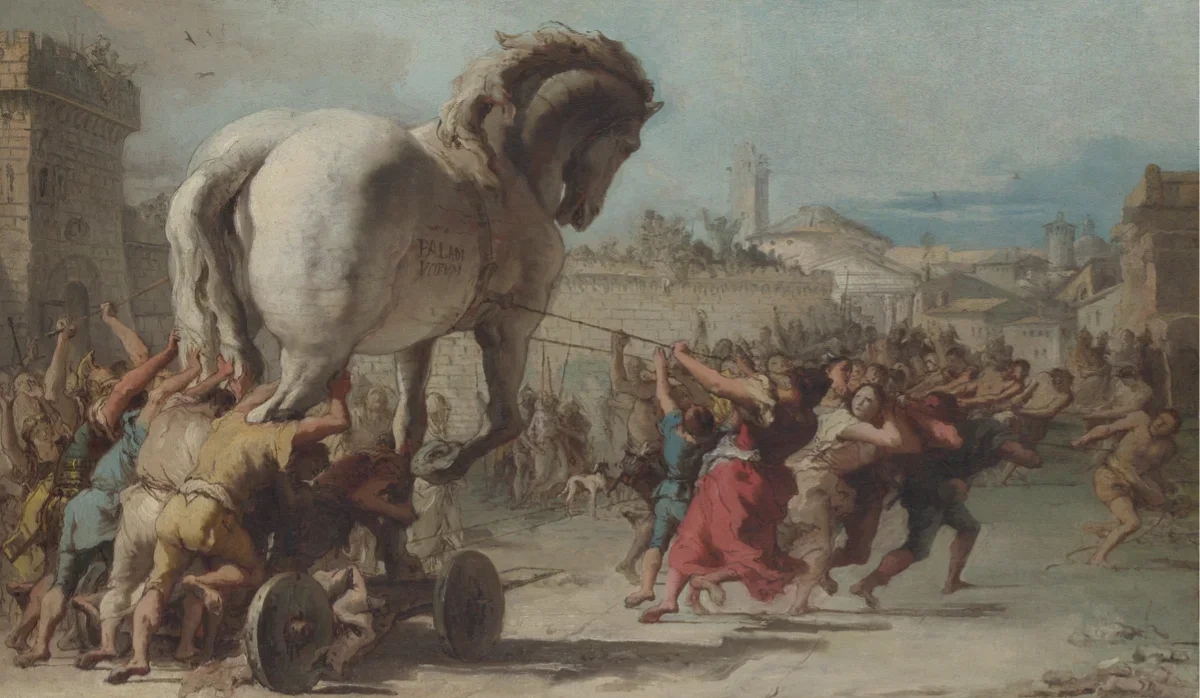
After ten years of siege, the walls of Troy still stood. Odysseus proposed the solution: a wooden horse, hollow, large enough to conceal a squad of warriors. The Greeks would pretend to sail away, leaving the horse on the beach as an offering to the gods.
The Trojans dragged it inside their own walls.
That night, the warriors climbed out. They opened the gates for the Greek army, which had sailed back under cover of darkness. Troy fell before morning.
It was the most consequential act of deception in ancient literature. It was also the beginning of Odysseus's problems.
The Cyclops
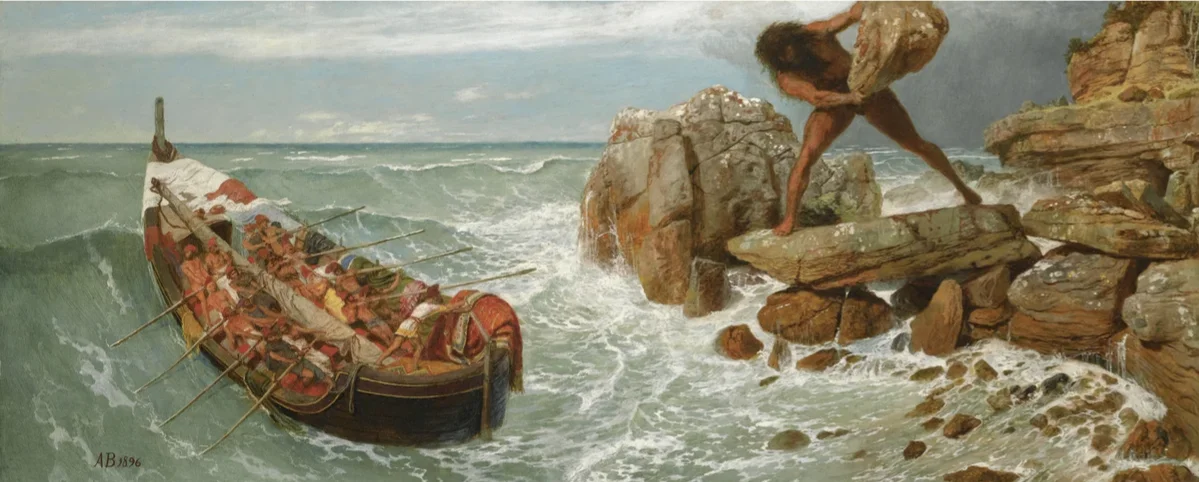
The first great disaster of the journey home involved a Cyclops named Polyphemus, son of the sea god Poseidon.
Odysseus and twelve of his men sheltered in Polyphemus's cave. The Cyclops sealed them in with a boulder and began eating them, two at a time.
Odysseus devised an escape. He sharpened a wooden stake and drove it into the Cyclops's single eye. Blinded, Polyphemus opened the cave to let his sheep out. Odysseus and his men escaped clinging to the undersides of the sheep.
It should have been a clean escape. But Odysseus could not resist calling back his name as they sailed away.
Polyphemus prayed to his father Poseidon to curse Odysseus. Poseidon heard. The god of the seas spent the next ten years making sure the journey home never ended.
Circe and the Year on the Island
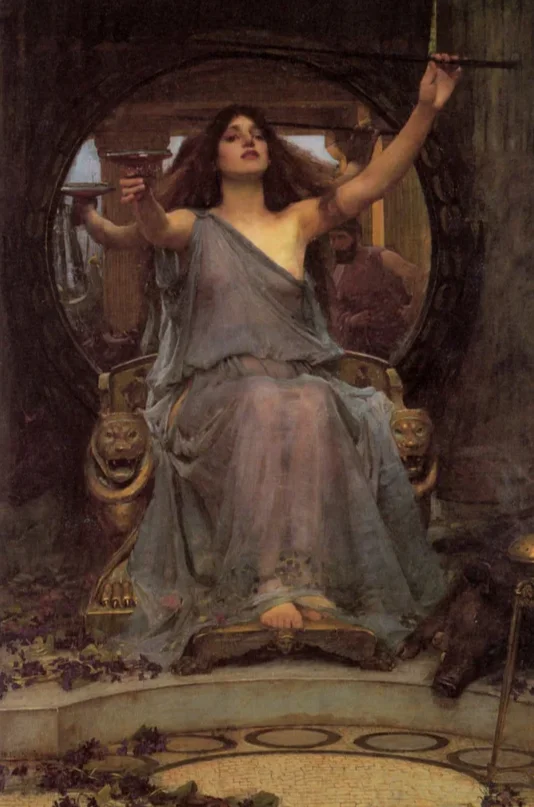
On the island of Aeaea, Odysseus and his crew encountered Circe, a powerful enchantress. She turned half his men into pigs.
With the help of the god Hermes, Odysseus resisted her magic. Circe reversed the transformation and became his ally, then his lover. He stayed on her island for a year.
It was Circe who told him what lay ahead: he would have to sail past the Sirens, pass between Scylla and Charybdis, and eventually descend to the edge of the underworld to consult the dead prophet Tiresias before he could find his way home.
He did all of it.
The Sirens
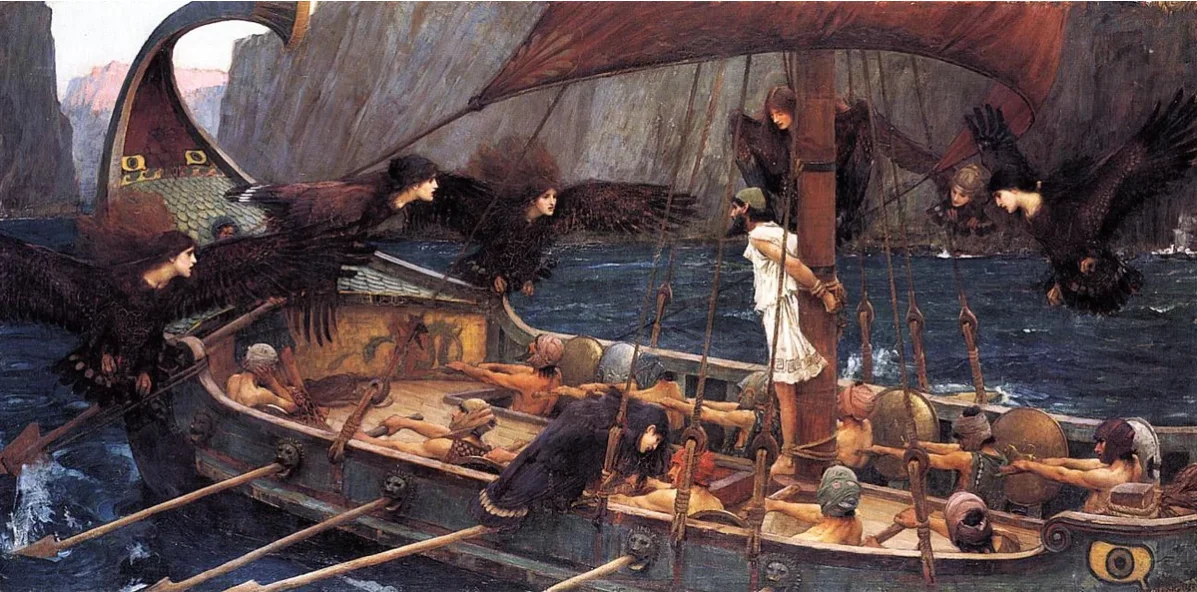
The Sirens were creatures whose singing drove sailors to steer their ships onto the rocks. No one who heard them had ever survived.
Odysseus had been warned, and had a plan. He ordered his crew to fill their ears with beeswax so they could not hear. Then he had himself tied to the mast so he could hear without being able to steer.
He heard the Sirens. He begged his crew to untie him. They rowed on, deaf to everything, until the singing faded.
He was the only man in history to hear the Sirens and live.
Calypso and the Offer of Immortality
The nymph Calypso found Odysseus shipwrecked on her island and fell in love with him. She kept him there for seven years, offering him what no mortal had ever been offered: immortality, eternal youth, and a life beside her forever.
He refused. Every morning, he sat on the shore and stared at the sea toward home.
It is one of the most striking moments in ancient literature: a mortal who chose mortality over forever because forever was not in the right place.
The Return
He came home to find his palace full of men competing to marry his wife Penelope, who had been holding them off for years with tricks of her own. His son Telemachus was grown and in danger.
Odysseus arrived disguised as a beggar. Only his old dog recognized him immediately, wagged his tail, and died.
The climax came through an archery contest. Only Odysseus could string his own bow. He strung it, shot through twelve axe-heads in a row, then turned the bow on the suitors.
He took back his home by force.
Why Odysseus Endures
Odysseus is not a simple hero. He lies constantly. He leaves people behind. His cleverness causes nearly as many problems as it solves. He is offered paradise and says no.
What makes him enduring is that he wants something specific, holds onto it through ten years of monsters, gods, enchantresses, and catastrophe, and eventually achieves it. Not because the gods loved him, but because he refused to stop.
Sources
Wikipedia, Odysseus: https://en.wikipedia.org/wiki/Odysseus
Homer, The Odyssey: https://en.wikipedia.org/wiki/Odyssey
Wikipedia, Polyphemus: https://en.wikipedia.org/wiki/Polyphemus