The gods gave Perseus a problem with no obvious solution, then sent him out to solve it anyway.
He was the son of Zeus and a mortal woman named Danae. His grandfather had been warned by an oracle that his daughter's son would kill him. His response was to lock Danae in a bronze chamber. Zeus visited her as a shower of gold. Perseus was the result.
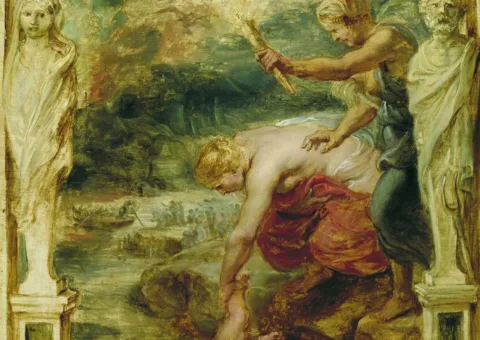
His grandfather put Danae and the infant Perseus in a wooden chest and threw it into the sea. They survived. They washed ashore on the island of Seriphos, where a fisherman found them and raised the boy as his own.
Perseus grew up. The problems began.
The Impossible Task
The king of Seriphos wanted to marry Danae and found Perseus inconvenient. He sent him on a quest designed to get him killed: bring back the head of Medusa.
Medusa was one of the Gorgons, three monstrous sisters with snakes for hair. Her face turned anyone who looked at it directly into stone. No one who had ever gone to face her had come back.
Perseus had three advantages. The goddess Athena gave him a polished bronze shield so he could see Medusa's reflection without looking at her directly. The god Hermes gave him a curved sword and winged sandals. And three ancient witches called the Graeae, who shared one eye between them, were persuaded to tell him where the Gorgons lived.
The Gorgon's Head
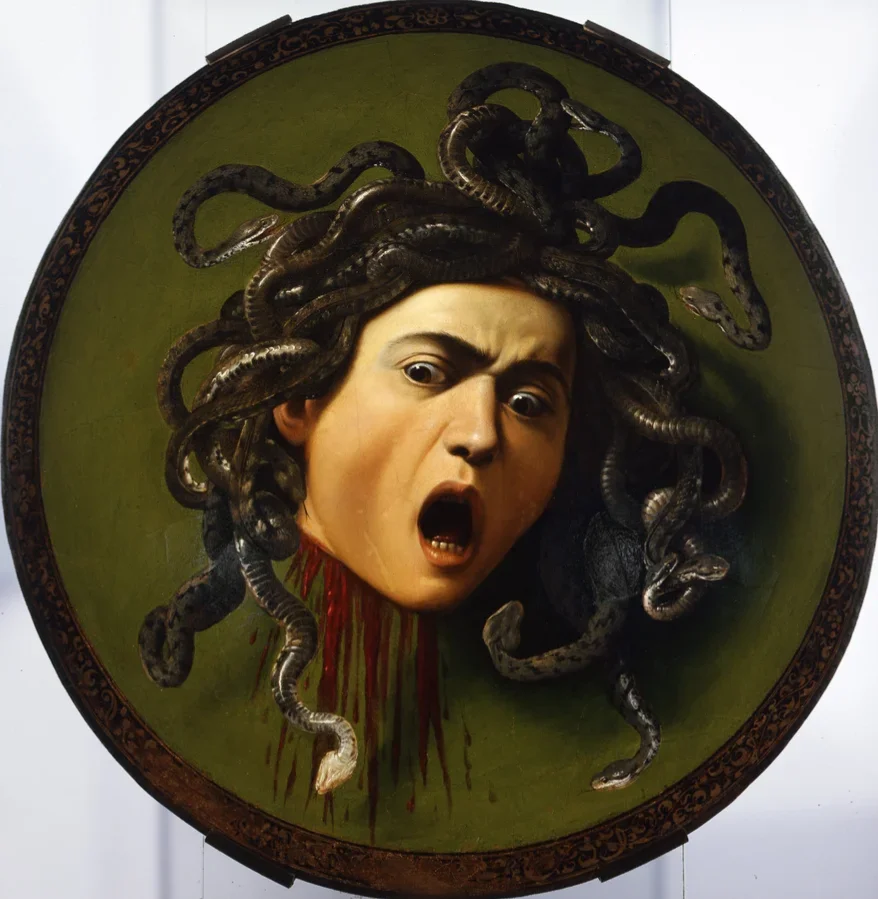
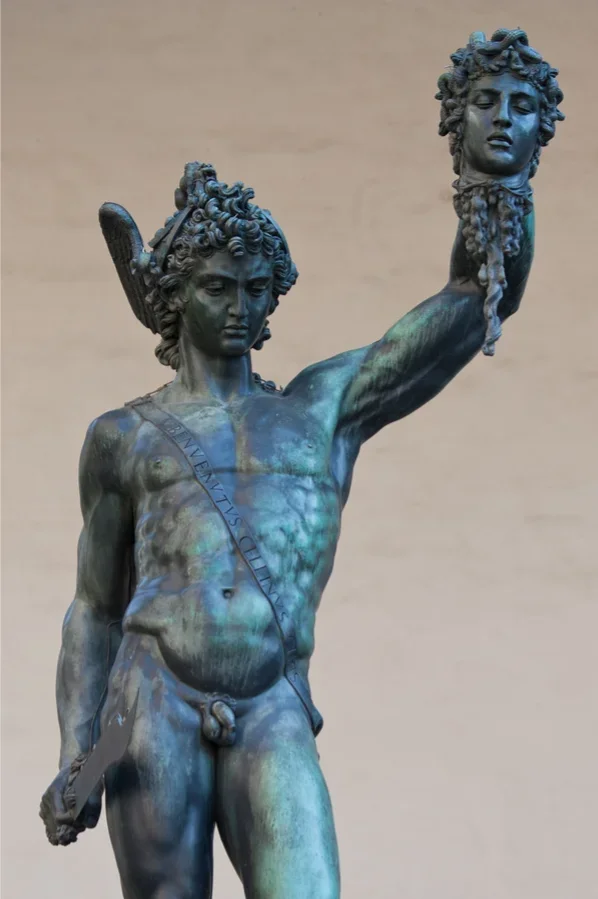
Perseus flew to the island where the Gorgons slept and approached Medusa backwards, watching her reflection in the shield. He struck off her head with a single blow.
From the blood that poured from her neck, two creatures sprang into existence: the winged horse Pegasus and the giant warrior Chrysaor. Perseus grabbed the head, sealed it in a bag where it could not be seen, and flew away.
He never looked at Medusa directly. The whole operation was a problem of optics.
Andromeda
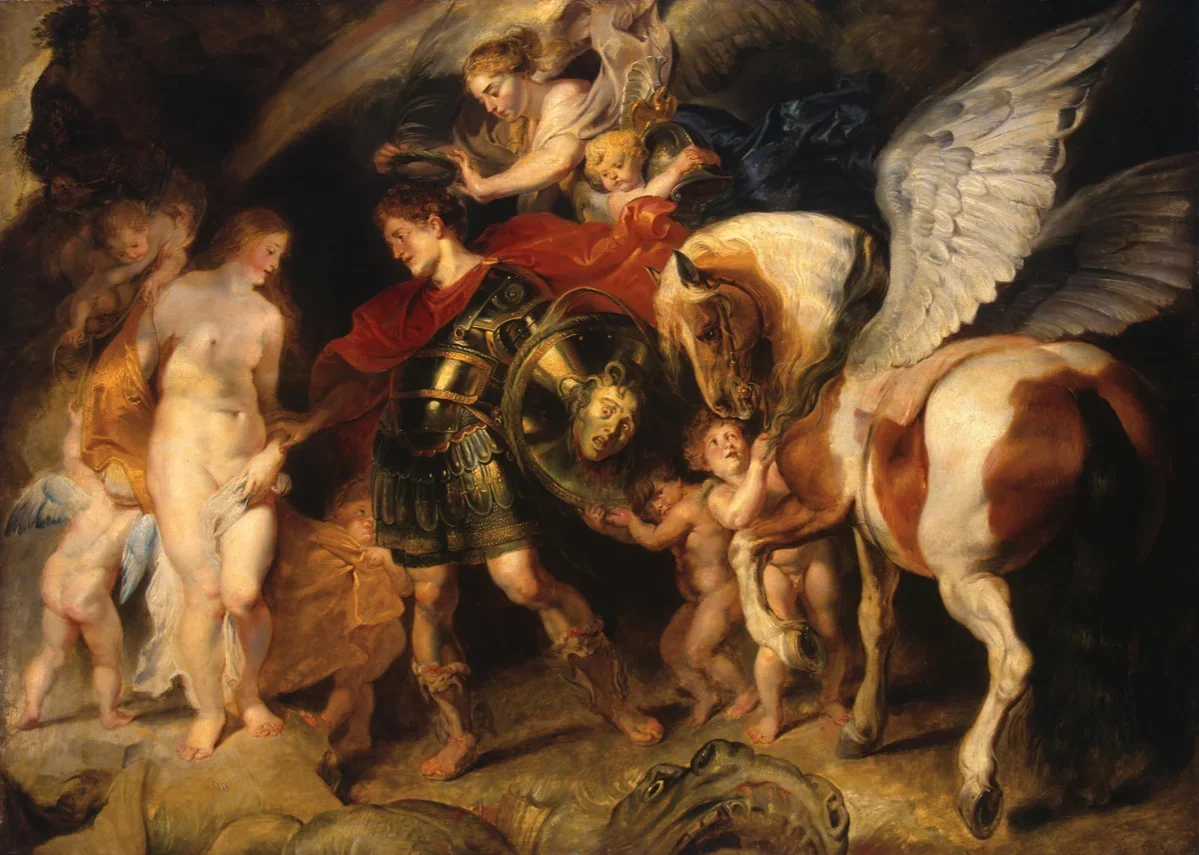
On his way home, Perseus flew over the coast of Ethiopia and saw a woman chained to a rock above the sea. Her name was Andromeda.
Her mother, Queen Cassiopeia, had boasted that her daughter was more beautiful than the sea nymphs. The sea god Poseidon, offended on the nymphs' behalf, sent a sea monster to ravage the coast. An oracle told the king that the only way to stop it was to sacrifice Andromeda to the monster. She had been chained to the rock to wait for it.
Perseus landed, negotiated her hand in marriage if he saved her, and waited for the monster.
The Sea Monster
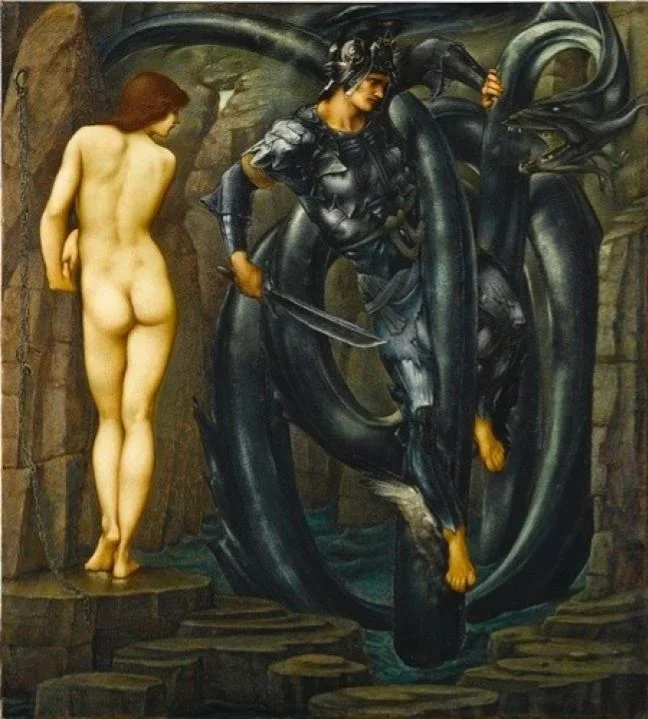
When the creature rose from the water, Perseus flew at it from above. He drove his sword into it again and again until it was dead. Then he struck off its head.
He unchained Andromeda. They married. The prophecy had not been forgotten: Perseus's grandfather, Acrisius, was still out there, still afraid of his grandson.
The Prophecy Fulfilled
Perseus never intended to kill his grandfather. He was competing in an athletics contest, throwing the discus, when a gust of wind sent the disc off course. It struck an old man in the crowd and killed him.
The old man was Acrisius.
The oracle had been right. No amount of scheming, chest-throwing, or bronze chambers had changed the outcome. It had only delayed it and made the path more complicated.
Perseus had not set out to fulfill the prophecy. He had been trying to live his life. The prophecy found him anyway.
The Head of Medusa
Perseus returned to Seriphos, found his mother under threat from the king, and took the head of Medusa out of its bag. The king and his allies were turned to stone.
He gave the head to Athena, who placed it on her shield, the aegis, where it remained as a weapon and a symbol forever after.
Why Perseus Endures
Perseus is the hero who solves the problem indirectly. He does not stare down Medusa. He builds a mirror. He does not wait passively for fate. He acts, negotiates, and uses every tool given to him.
His story is built on elegant solutions to impossible problems, and on the uncomfortable truth that fate is not a thing you can outrun, only something you eventually collide with while trying to live.
Sources
Wikipedia, Perseus: https://en.wikipedia.org/wiki/Perseus
Wikipedia, Medusa: https://en.wikipedia.org/wiki/Medusa
Wikipedia, Andromeda (mythology): https://en.wikipedia.org/wiki/Andromeda_(mythology)