Everyone knows the quote. Almost nobody knows where it came from, what philosophy is behind it, or why a 2,500-year-old Chinese text made it possible. Here is the full story.
The Quote Everyone Knows
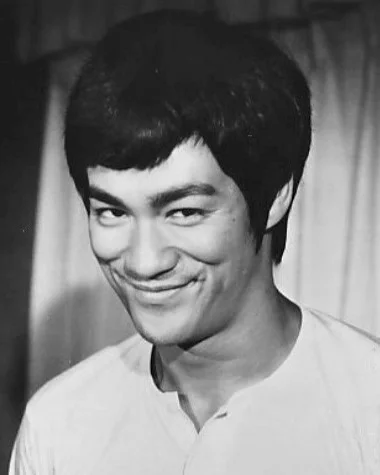
"Empty your mind, be formless, shapeless, like water. Now you put water into a cup, it becomes the cup. You put water into a bottle, it becomes the bottle. You put it in a teapot, it becomes the teapot. Now water can flow, or it can crash. Be water, my friend."
Bruce Lee, December 9, 1971. The Pierre Berton Show, Hong Kong.
That was his only English-language TV interview. He was 30 years old. He would die 19 months later.
Where It Actually Came From
Most people think Lee improvised this on camera. He did not. Three months earlier, the exact words appeared in a Longstreet TV episode called "The Way of the Intercepting Fist" (September 16, 1971). Lee wrote the philosophy. His student and screenwriter Stirling Silliphant shaped it into dialogue.
When Pierre Berton asked Lee to recite the key lines from that episode, Lee did not hesitate. The words were his. He had lived them long before a camera caught them.
That interview was lost for decades. It was rediscovered later under the title "Bruce Lee: The Lost Interview."

The 2,500-Year-Old Root
Lee did not invent the water metaphor. He inherited it from Laozi, who wrote the Tao Te Ching around the 4th century BC.
Chapter 8: "The highest good is like water. Water benefits all things and does not compete with them. It flows to the places people reject. That is why it is close to the Tao."
Chapter 78: "Under heaven, nothing is more soft and yielding than water. Yet for attacking the hard and strong, nothing can surpass it. Everyone knows this. No one acts on it."
That last line is the one. Everyone knows it. No one acts on it. Lee spent his life being the exception.
Why His Teacher Changed Everything
Lee was naturally aggressive as a fighter. Too yang. Too hard, too forceful. His Wing Chun master Ip Man saw this and corrected him. He pushed Lee toward yin: yielding, soft, receiving.
Lee did not take this as weakness. He studied it as strategy.
Water does not fight the rock. It flows around it, under it, through every crack. Given enough time, it shapes the rock into something entirely different. Lee applied this directly to Jeet Kune Do, the martial art he formalized in 1967. The name translates as "the way of the intercepting fist." Not the hardest fist. The fist that arrives at exactly the right moment, from exactly the right angle, without announcing itself in advance.

What Formlessness Actually Means
Lee wrote in the Tao of Jeet Kune Do: "Jeet Kune Do favors formlessness so that it can assume all forms."
This sounds simple. It is not.
Most people train a system. A style. A set of moves that work in specific situations. That system becomes a cage. The opponent reads the pattern and the pattern stops working.
Water has no pattern. Water becomes whatever it enters. A cup, a bottle, a teapot. The container changes. The water adapts instantly and without argument.
In a fight, this means no fixed stance, no committed technique, no telegraphed movement. In life, it means no rigid identity so fragile it shatters when circumstances shift.

Two Modes of Water
Lee said it explicitly in the quote: water can flow, or it can crash.
This is not about being passive. Water that flows finds the path of least resistance. Water that crashes splits rock. The choice depends entirely on what the situation calls for.
This is why the Tao Te Ching calls water the softest thing that overcomes the hardest. It is not weak. It is responsive. It does not waste force on resistance. It applies exactly what is needed, exactly when it is needed.
Lee added elsewhere: "Running water never grows stale. So you just have to keep on flowing."
Stagnant water becomes poison. Moving water stays clean. The philosophy is not about having no direction. It is about never stopping.
Why This Still Works
Nassim Taleb wrote about antifragility decades after Lee died. Things that not only survive disruption but grow stronger from it. Water is antifragile. You cannot damage it by hitting it. You cannot break it by applying pressure. It absorbs force and continues.
People working through long, difficult changes know this feeling from the wrong side. They have tried to force things. Hard rules, rigid timelines, all-or-nothing thinking. It fails because life does not hold still. The goal moves. The circumstances shift. The person changes.
Lee's water model offers something different. Not no direction, but no fixed form. Adaptable purpose. Clear intention, flexible execution.
You know where you are going. You do not know the exact path. Water knows this by design.

One More Quote
From Lee's personal notebooks, published in Striking Thoughts:
"Flow in the living moment. If nothing within you stays rigid, outward things will disclose themselves. Moving, be like water. Still, be like a mirror. Respond like an echo."
Three states. Moving. Still. Responding. None of them forced.
The Takeaway
The quote is not about giving up. It is not about going with the flow in the passive sense. It is about removing the brittleness that makes change impossible.
A cup cannot become a bottle. Water can.
The goal is not to be a cup. The goal is to be water.
Sources
Pierre Berton Show (1971):
https://en.wikipedia.org/wiki/Bruce_Lee:_The_Lost_Interview
Tao of Jeet Kune Do (1975): Bruce Lee, Ohara Publications
Striking Thoughts (2000): Bruce Lee, Tuttle Publishing
Tao Te Ching: Laozi, chapters 8 and 78
Wikipedia Commons (images):
https://commons.wikimedia.org