Before he was a king, he was a soldier with a plan and a small band of allies.
Darius I, known as Darius the Great, is one of the ancient world's most remarkable rulers. He took control of the Persian Empire in 522 BC under dramatic circumstances, then transformed it into the most powerful and sophisticated state the world had ever seen. His story is one of ambition, brutal efficiency, and extraordinary vision.
The Man Who Seized Power
The Persian Empire was thrown into chaos when Cambyses II, son of Cyrus the Great, died in 522 BC on his way back from Egypt. A man claiming to be Cambyses' brother Smerdis had seized the throne. Darius, then a young Persian nobleman and military officer, believed this Smerdis was an imposter.
He formed a conspiracy with six other Persian nobles. They stormed the palace, killed the false king, and Darius emerged as the new ruler of Persia.
Nineteen revolts broke out almost immediately. Darius crushed them all within a single year. He recorded his victories on the famous Behistun Rock, a massive cliff inscription in what is now Iran: a monument visible for miles, declaring to the world that he ruled by the grace of Ahura Mazda, the Persian god of light.
The Empire Builder
Once secure in power, Darius proved to be an administrator of genius. He reorganized the empire into 20 provinces called satrapies, each governed by a trusted official called a satrap. He introduced a standardized system of weights, measures, and coinage. He built roads.
His Royal Road stretched over 2,700 kilometers from Sardis in western Turkey to Susa in Iran. With a network of royal messengers, news could travel this distance in just seven days. It was the ancient world's postal service and intelligence network combined.
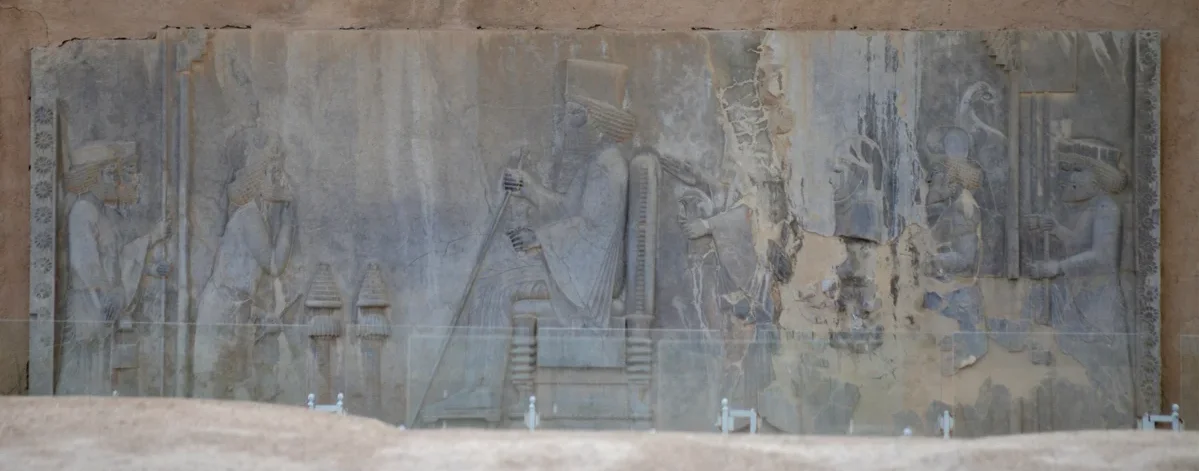
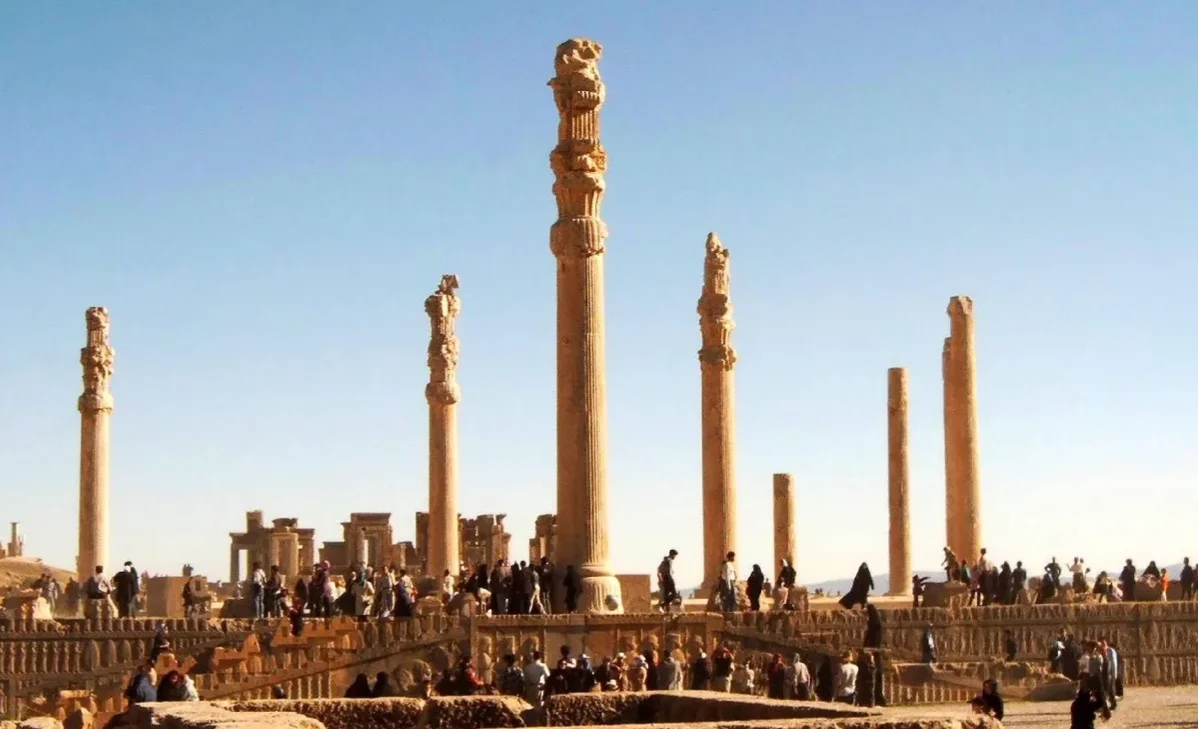
He also began construction on Persepolis, the magnificent ceremonial capital whose ruins still stand today.
The Jewel of the Ancient World
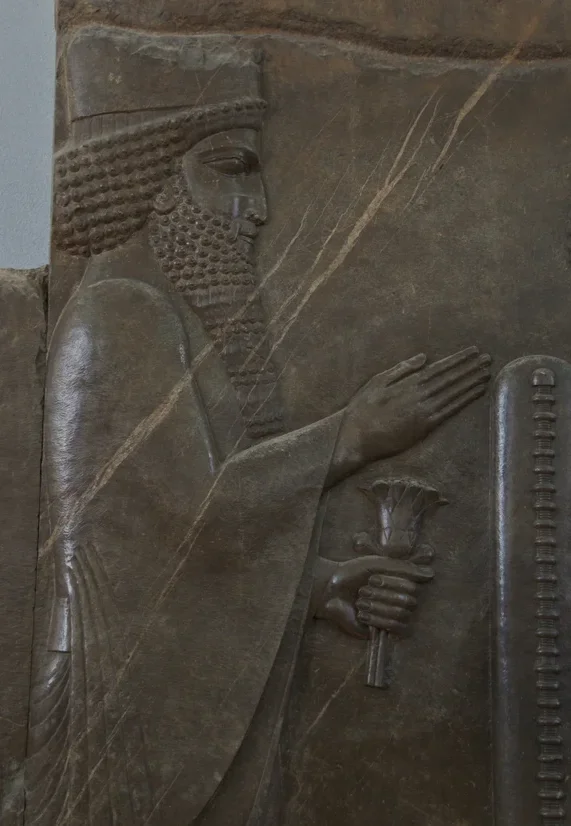
Persepolis was not meant to be a city where people lived. It was a stage. Every spring, delegations from across the empire's 23 nations arrived here to present tribute to the king. The reliefs carved into its walls still show them: Egyptians with cattle, Lydians with gold, Indians with donkeys, Scythians with horses.
It was Darius's statement to the world about what he had built. An empire held together not just by military force, but by ceremony, ritual, and a carefully constructed idea of Persian kingship.
The Clash with Greece
Darius's empire stretched from Egypt to India, from the Black Sea to the Persian Gulf. It was the largest empire the world had ever seen. But Greece proved impossible to swallow.
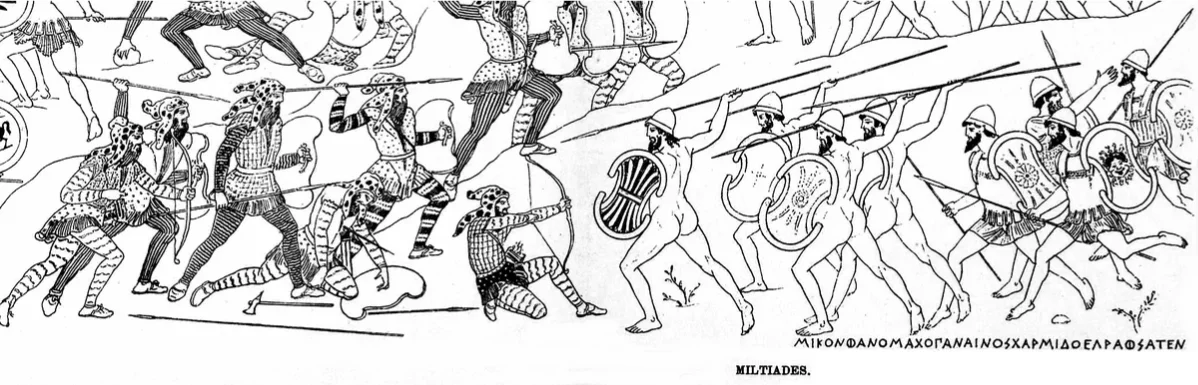
After supporting a revolt of Greek cities in Persia's territory in 499 BC, the city-states of mainland Greece had made themselves enemies of Persia. In 490 BC, Darius sent an army to punish them.
At the Battle of Marathon, roughly 10,000 Athenian soldiers charged across the plain and routed a much larger Persian force. It was one of the most unexpected defeats in ancient history.
Darius began planning a full-scale invasion of Greece. He never led it. He died in 486 BC, leaving that task to his son Xerxes.
His Legacy
Darius I ruled for 36 years. He created the administrative framework that allowed the Persian Empire to hold together for two more centuries after his death. He built Persepolis, one of the most astonishing architectural achievements of antiquity. He gave the ancient world its first great network of roads and royal communications.
He lost at Marathon. He never conquered Greece. By the grand scale of what he built and what he achieved, that failure was a footnote.
Sources
Wikipedia, Darius I: https://en.wikipedia.org/wiki/Darius_I
Encyclopaedia Iranica: https://www.iranicaonline.org/articles/darius-i
Wikipedia, Behistun Inscription: https://en.wikipedia.org/wiki/Behistun_Inscription