Some problems cannot be solved. They can only be cut.
The Gordian Knot is one of history's most powerful symbols of bold, decisive leadership. A legend over 2,300 years old, it tells the story of an impossible knot, a young conqueror, and the moment that changed the ancient world.
The Knot That Could Not Be Untied
Around 333 BC, Alexander the Great was marching through Phrygia, a region in what is now central Turkey. He arrived at the ancient city of Gordium, the former capital of the Phrygian kingdom. In the city's temple of Zeus stood a legendary wagon.
The wagon belonged to Gordius, the mythical founder-king of Phrygia. According to the oracle, whoever untied the wagon's yoke knot would become ruler of all Asia. Travelers and rulers had tried for centuries. No one had ever succeeded.
The knot was no ordinary tangle. It was tied with cornel bark that had dried and tightened over decades. The ends of the rope were hidden inside the knot itself. There was no visible way to begin.
Alexander Arrives in Gordium
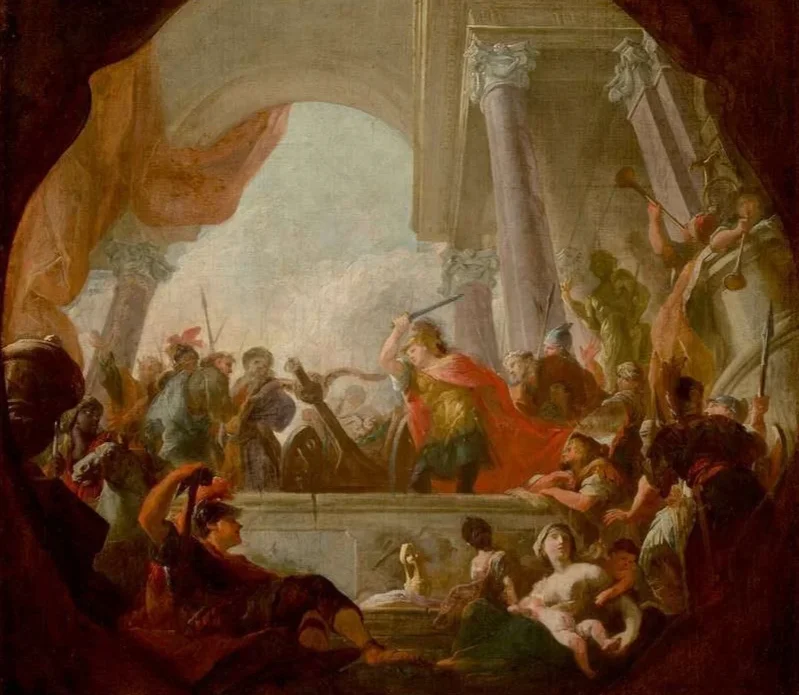
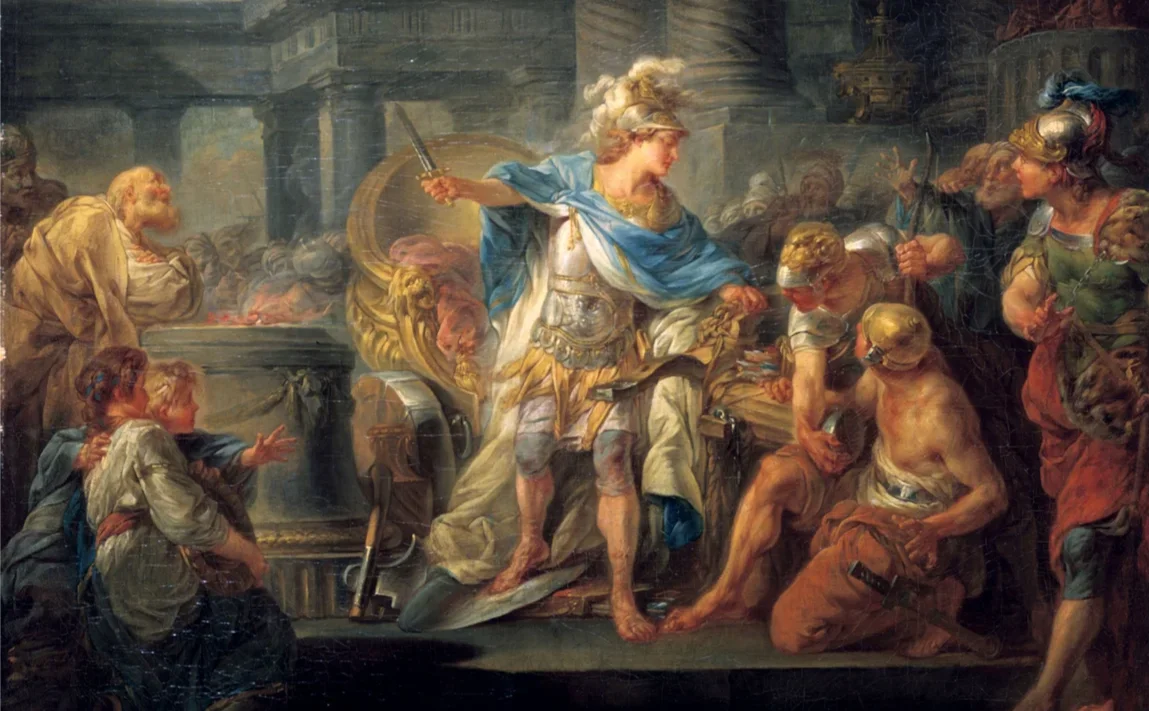
When Alexander entered the temple, he studied the knot carefully. His soldiers and the temple priests watched. He was 22 years old, already king of Macedonia and Greece, now preparing to conquer the Persian Empire. Failure here, in front of his army, would have been devastating.
He thought for a moment. Then he acted.
The Sword Stroke
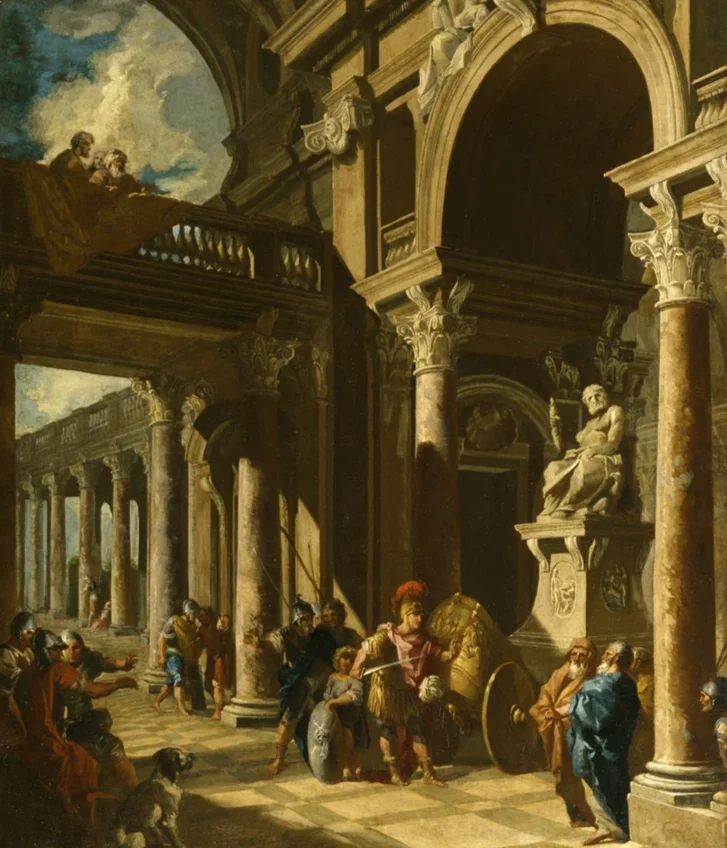
According to the most famous version, Alexander simply drew his sword and sliced through the knot in a single stroke. Some ancient sources say he found a pin holding the knot's core together and pulled it out, releasing the whole thing. Either way, the knot was undone.
That night, there was thunder and lightning. The priests declared it a sign from Zeus. Alexander had fulfilled the oracle's prophecy.
Within a year, he had defeated the Persian king Darius III at the Battle of Issus and was well on his way to ruling an empire stretching from Greece to India.
What the Knot Really Represents
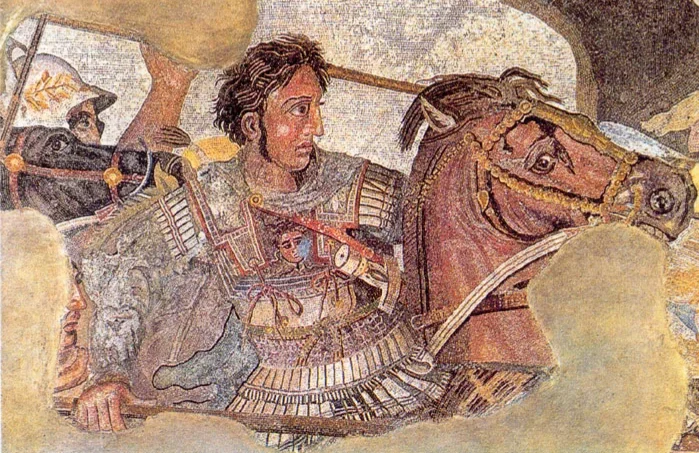
The story of the Gordian Knot has lived for centuries because it captures something deeply true about problem-solving. Sometimes the most brilliant move is not to work within the rules of a problem but to reject those rules entirely.
The knot was designed to be untied from the outside, with patience and skill. Alexander ignored that assumption. He redefined the problem. The oracle said to undo the knot. It said nothing about how.
This is why cutting the Gordian Knot became a phrase still used today: a bold, decisive action that solves a seemingly impossible problem by bypassing conventional thinking.
Sources
Wikipedia, Gordian Knot: https://en.wikipedia.org/wiki/Gordian_Knot
Plutarch, Life of Alexander: https://penelope.uchicago.edu/Thayer/E/Roman/Texts/Plutarch/Lives/Alexander*/home.html
Walters Art Museum: https://art.thewalters.org/detail/37516