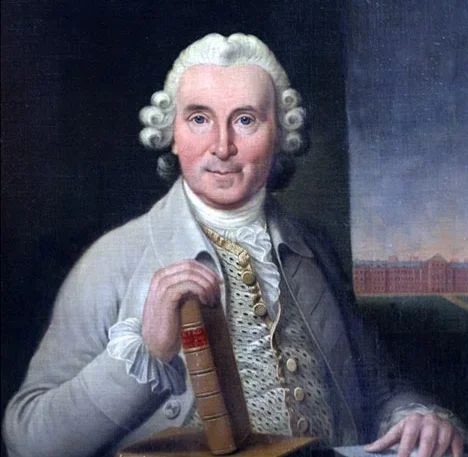
In 1747, a ship's surgeon divided twelve sick sailors into six pairs and gave each pair a different treatment. The result would take 42 years to change the Royal Navy.
The Problem at Sea
Scurvy killed more sailors than combat, storms, and shipwreck combined during the age of sail. The disease began with fatigue and irritability, progressed to swollen and bleeding gums, loosening teeth, reopening of old wounds, and ended in death if untreated. It struck on any voyage lasting longer than six to eight weeks without access to fresh food.
Sailors and physicians had accumulated observations connecting fresh food to recovery for nearly two centuries before James Lind sat down to test this systematically. Portuguese sailors had documented that fresh oranges helped. British naval physician Richard Woodall had recommended lemon juice in 1617. None of this knowledge translated into Navy policy, partly because competing theories about scurvy's cause, bad air, salt, dampness, inactivity, had equal or greater standing, and because no one had compared treatments directly.
The Trial Aboard HMS Salisbury
James Lind was born in Edinburgh in 1716. He joined the Royal Navy as a surgeon's mate in 1739 and served throughout the War of Austrian Succession. By 1747 he held the rank of ship's surgeon aboard HMS Salisbury, a fourth-rate ship of 50 guns operating in the English Channel.
In May 1747, with an outbreak of scurvy among the crew, Lind selected twelve men with similar symptoms and divided them into six pairs. All twelve received the same baseline diet of water gruel and mutton broth. Each pair received a different additional treatment for two weeks:
Pair 1 received a quart of cider daily.
Pair 2 received 25 drops of elixir of vitriol (dilute sulfuric acid), a fashionable remedy.
Pair 3 received two spoonfuls of vinegar three times a day.
Pair 4 received half a pint of seawater daily.
Pair 5 received two oranges and one lemon daily.
Pair 6 received a paste of garlic, mustard seed, horseradish, and other ingredients.
After two weeks, the two men who received oranges and lemons were fit for duty. One of the cider pair showed modest improvement. All other pairs were unchanged or worse.
The Book and the Long Delay
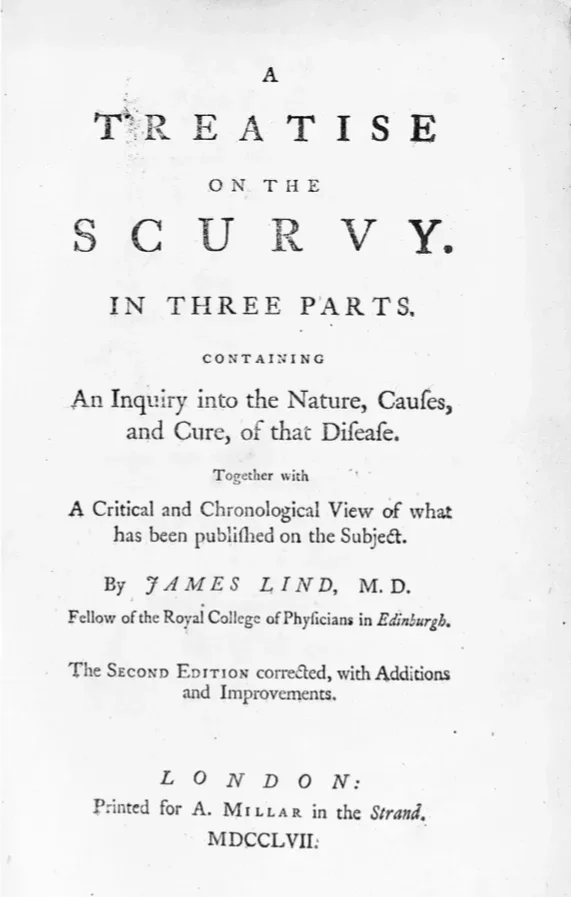
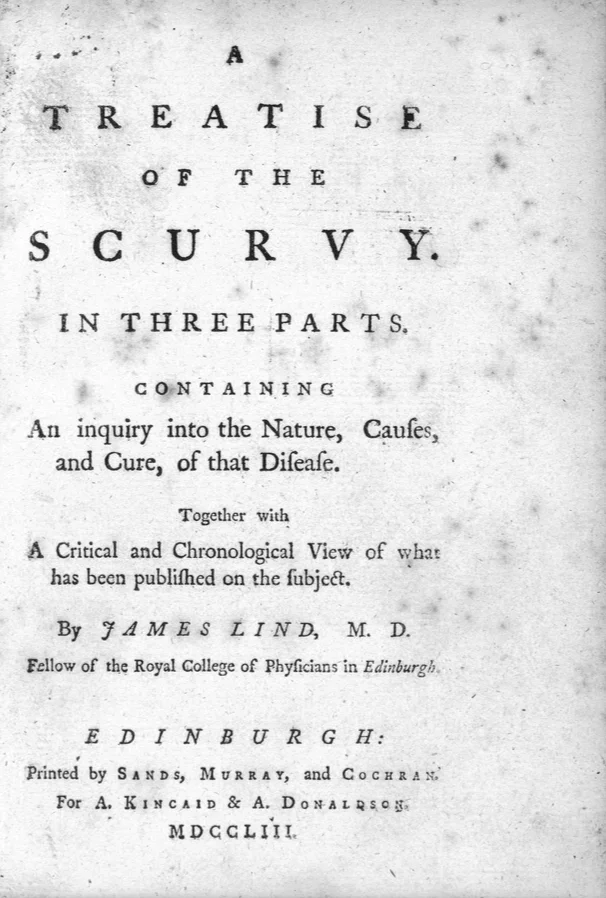
Lind left the Navy in 1748 and published A Treatise of the Scurvy in 1753, six years after his trial. The book was thorough, scholarly, and ultimately unhelpful as a policy document because Lind himself muddled his clear experimental finding with extensive discussion of competing theories. He argued at length that concentrating citrus juice by boiling produced a more practical product than fresh fruit, not knowing that boiling destroys vitamin C. The Navy's limited experiments with Lind's recommended preserved juice showed inconsistent results for exactly this reason.
Lind spent the next three decades as physician to the Haslar Royal Naval Hospital, the largest hospital in the world at the time, and continued his medical work. He died in 1794. The Royal Navy did not begin issuing lemon juice to all sailors until 1795, the year after his death, an institutional delay of 42 years from a clear experimental result to a universal policy.
Why the Delay Happened
The gap between Lind's experiment and the Navy's response illustrates a pattern that historians of medicine have since traced in many other cases. Lind's trial was not recognized as a controlled experiment by his contemporaries because the concept of a controlled clinical trial did not yet exist as a formal category. There was no framework for deciding what kind of evidence should override established theories and expert opinion.
The authority of prominent physicians who preferred alternative theories of scurvy, and the practical cost of providing citrus juice to a large fleet, both worked against adoption. When Gilbert Blane, a physician with direct access to the Admiralty, finally pushed the policy through in 1795, he did so partly by framing the economic argument: treating scurvy disabled ships and drained manpower, and citrus juice was cheaper than the consequences.
Lind had demonstrated the cure 42 years earlier. The institutional machinery to act on the demonstration took four decades to engage.
Sources
Wikipedia, James Lind: https://en.wikipedia.org/wiki/James_Lind
Wikipedia, Scurvy: https://en.wikipedia.org/wiki/Scurvy
Wikipedia, A Treatise of the Scurvy: https://en.wikipedia.org/wiki/A_Treatise_of_the_Scurvy
Troehler, Ulrich (2005): Lind and Scurvy. JLL Bulletin. https://www.jameslindlibrary.org/articles/lind-and-scurvy-1747/