A Child of Dresden
Maria Reiche was born on 15 May 1903 in Dresden, in what was then the German Empire. Her father was a judge. From an early age she showed a strong aptitude for mathematics and languages. She studied mathematics, astronomy, geography and foreign languages at the Technische Universitaet Dresden, eventually becoming fluent in five languages, including Spanish, which would prove decisive for the second half of her life.
A Long Way from Home
In 1932, at the age of twenty-nine, Reiche moved to Peru to work as a governess and tutor for the children of the German consul in Cusco. It was a practical decision, not a romantic one. She stayed. By 1939 she had moved to Lima, where she worked as a teacher. Then, in 1940, her life changed in a way she could not have anticipated.
An American historian named Paul Kosok was in Peru researching ancient irrigation systems when he began looking at aerial photographs of the Nazca pampa, a dry, high plateau in southern Peru. He noticed long straight lines scratched into the reddish desert surface, forming geometric shapes and, more strikingly, figures of animals and birds. He needed an assistant who spoke Spanish and understood mathematics. He found Reiche.
The Day the Lines Spoke
On 21 June 1941, the winter solstice in the Southern Hemisphere, Kosok and Reiche stood on the Nazca plateau and watched the sun set directly along one of the longest lines. Kosok called it the largest astronomy book in the world. Reiche agreed, and when Kosok returned to the United States in 1948, she stayed behind. She would not leave for fifty years.
Life on the Pampa
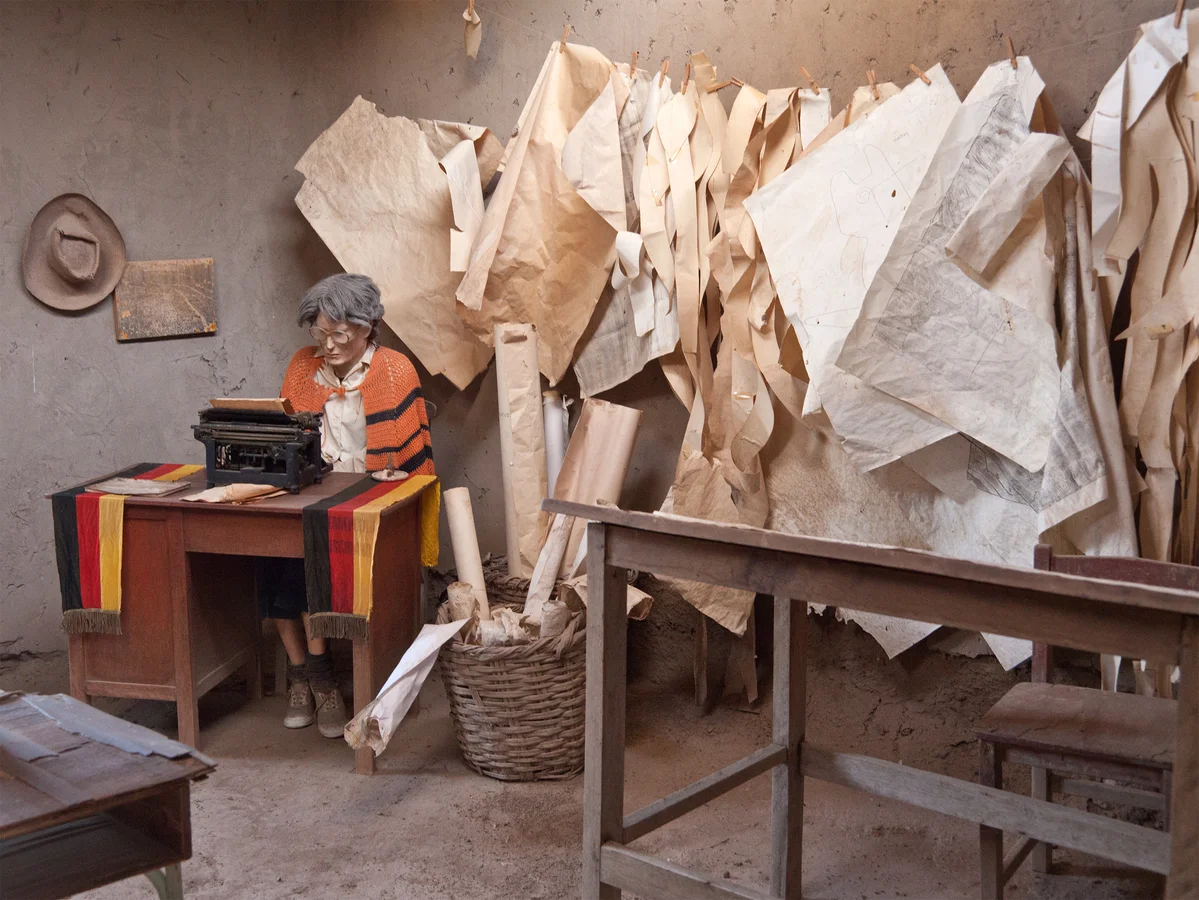
Reiche lived in extreme simplicity near the Nazca lines for decades. She slept in a small house at the edge of the desert. She swept the lines clean with a broom she carried herself, removing debris so that the figures could be measured and photographed. She paid for security guards out of her own pocket to keep vehicles off the geoglyphs.
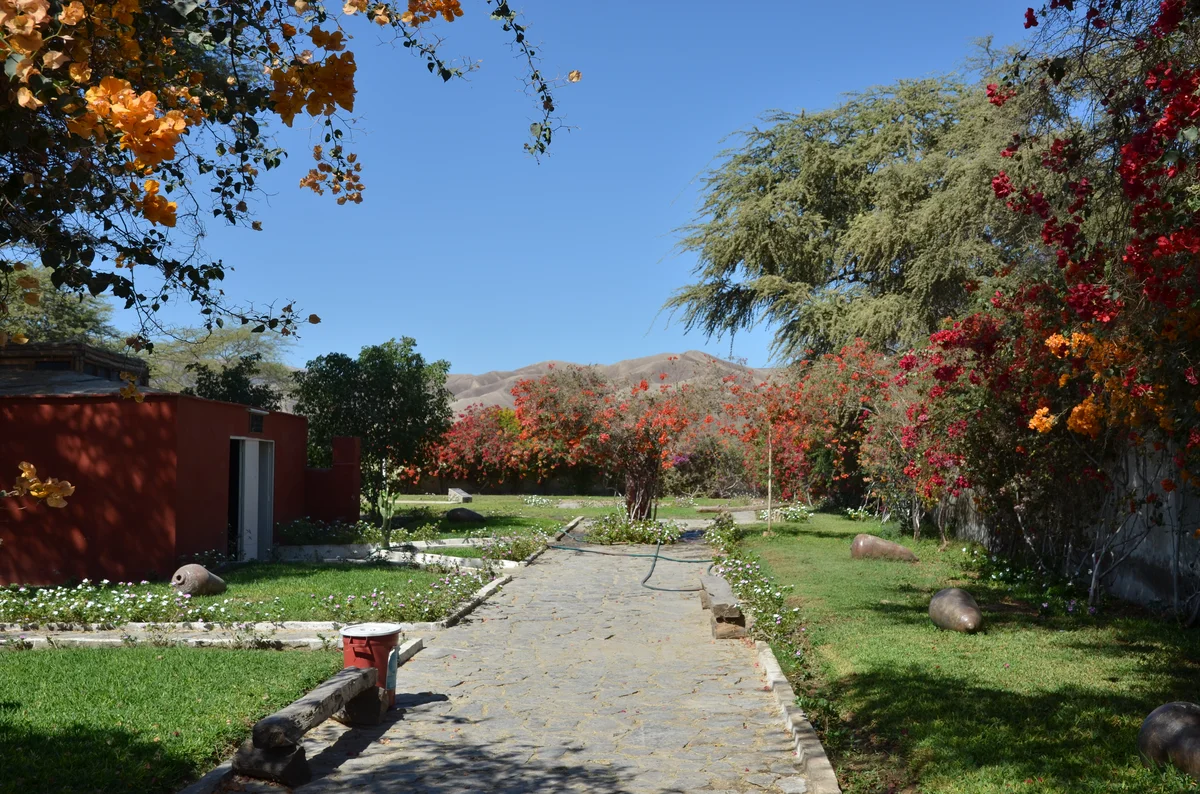
She persuaded the Peruvian air force to take aerial photographs that became essential for documentation. She worked every day, often under fierce sun, measuring with a tape, drawing diagrams, mapping the positions of lines against astronomical events. She had no institutional support for most of this period, no university grant, no government funding. She published her findings herself in a book called The Mystery on the Desert in 1949, funding the print run from her own savings.
What She Found
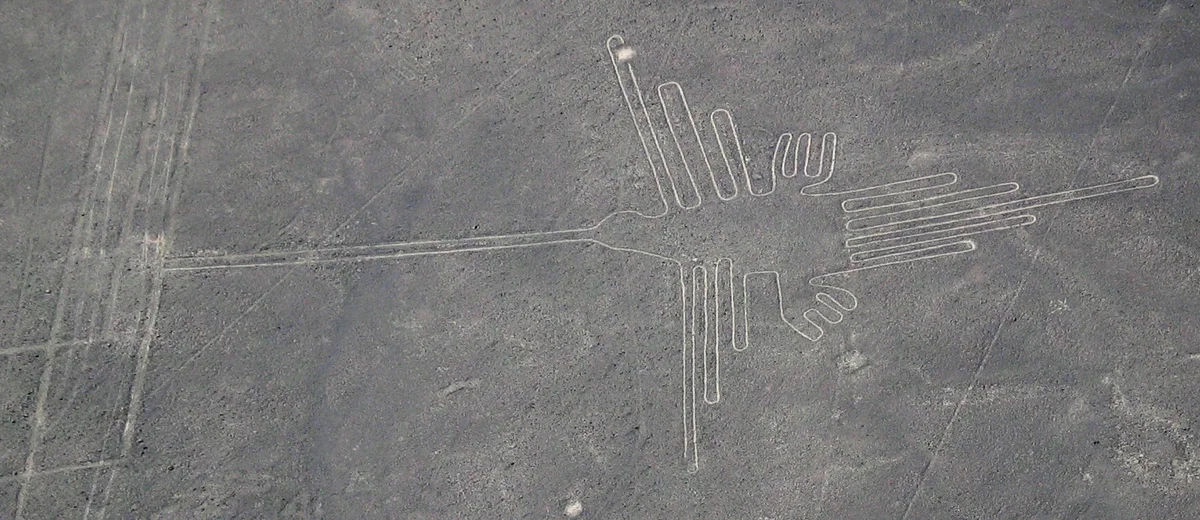
The Nazca lines fall into two main categories. The first are simple geometric forms: straight lines, some stretching for kilometres without deviation, plus trapezoids, spirals, and zigzags. The second are biomorphic figures, large representations of animals and birds visible only from the air.

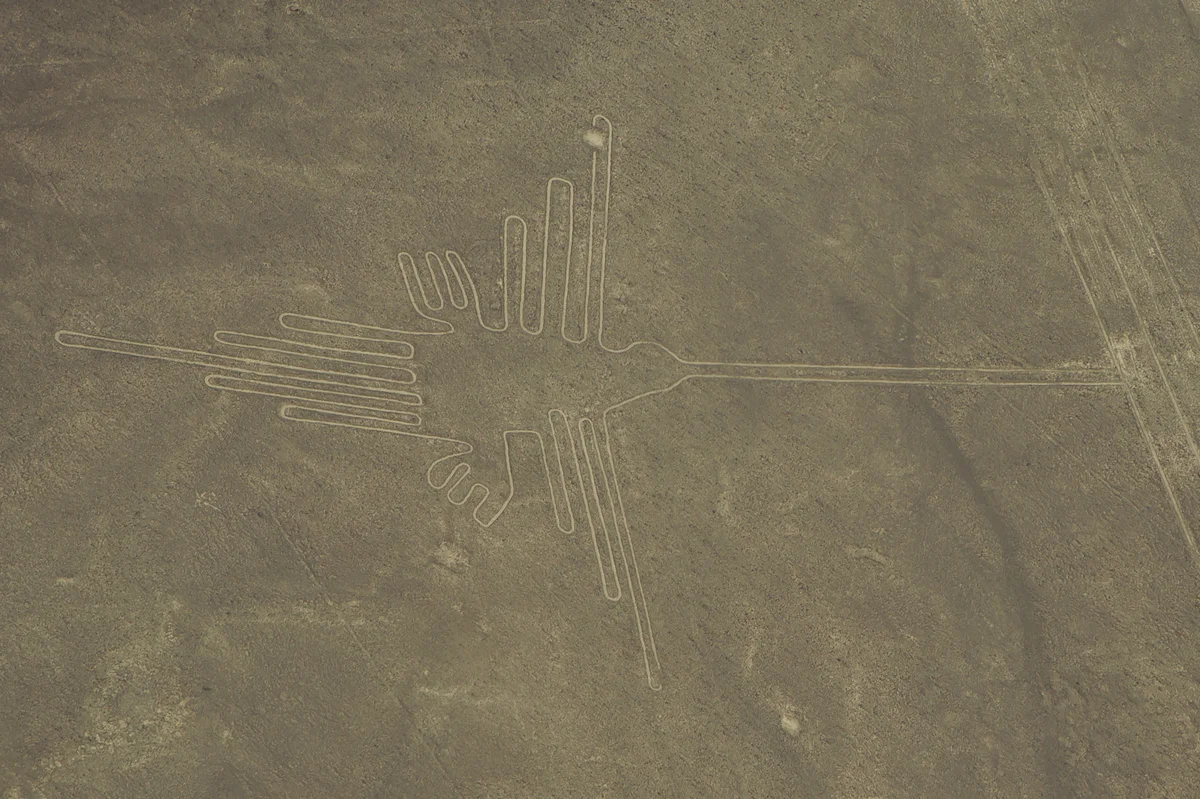
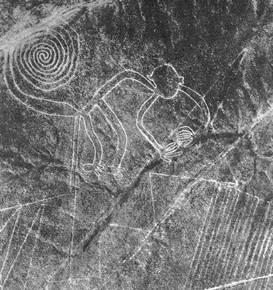
Reiche catalogued approximately eighteen such figures with confidence, including the Hummingbird, roughly 93 metres long, the Condor with a wingspan of about 130 metres, the Spider at approximately 46 metres, and the Monkey, over 90 metres, with a distinctive spiralling tail. The figures were made by removing the reddish-brown iron oxide-coated pebbles from the desert surface, revealing the pale yellow-grey ground beneath.
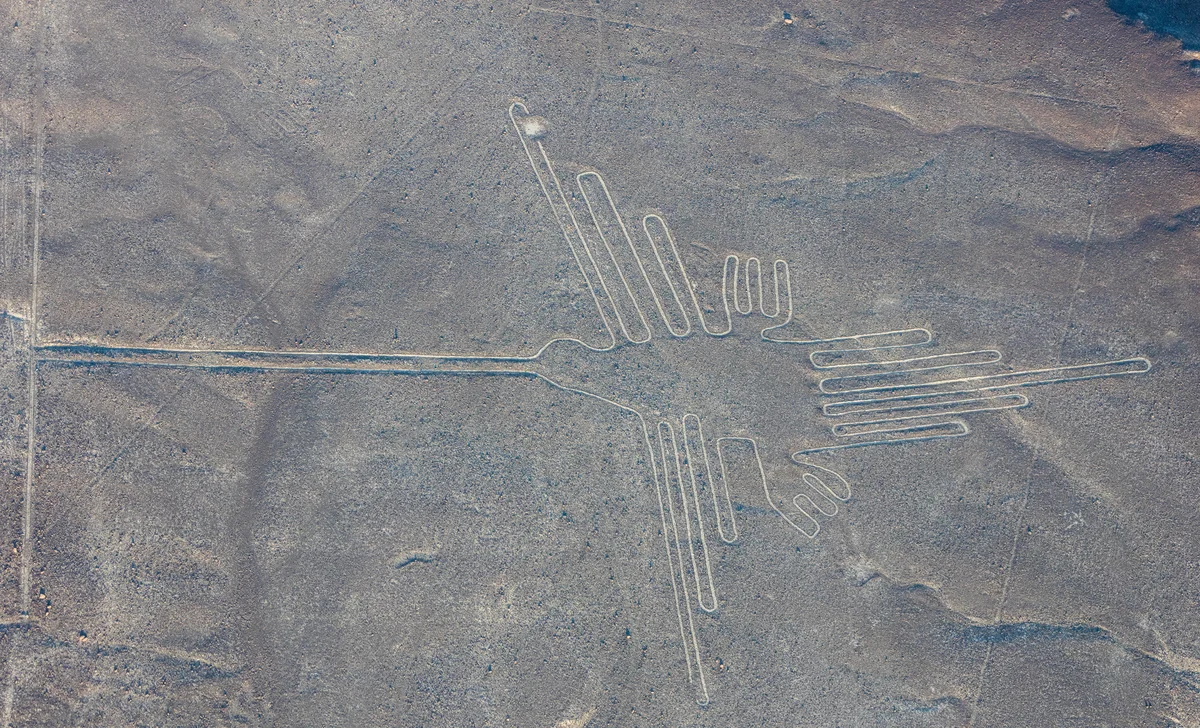
The ancient Nazca people, who created the lines between roughly 200 BCE and 600 CE, had no aircraft. Reiche devoted much of her analytical effort to understanding how they could have planned and executed figures of such scale and geometric precision without ever seeing the finished result from above.
Her Theory: A Cosmic Calendar
Reiche became the leading proponent of the astronomical interpretation of the Nazca lines. She argued that the lines and figures functioned as a large-scale calendar, marking solstices, equinoxes, and the rising and setting points of important stars and constellations. Her mathematical background was central to this work.
She could calculate where celestial bodies would have appeared on the horizon centuries ago and check those positions against the orientation of the lines. Later researchers, including Gerald Hawkins and Anthony Aveni, conducted statistical analyses in the 1980s and found that most lines showed no significant correlation with astronomical events beyond chance. Other scholars proposed ritual or ceremonial purposes, perhaps as walking paths for processions. The debate continues.
Recognition and Legacy
As her reputation grew, so did the recognition. Two universities in Lima awarded her honorary doctorates. She received Peruvian honorary citizenship. The airport at Nazca was named the Maria Reiche Neuman Airport in her honour.
In 1994, the Nazca Lines were inscribed as a UNESCO World Heritage Site. Reiche had spent more than forty years arguing for their protection. She was ninety-one years old when the designation came through. She died on 8 June 1998, at the age of ninety-five, of ovarian cancer, in a hospital in Lima. She was buried in Nazca, near the lines she had guarded for half a century.
Watch the Story on Film
The 2025 film Lady Nazca, directed by Damien Dorsaz, tells Maria Reiche story with remarkable restraint and honesty. Devrim Lingnau plays Reiche and the film received an 8 out of 10 in Harry Movie Check.
Read the full review at: allyouneedisharry.com/harrysblog/harrys-movie-check-lady-nazca-2025
Sources
Wikipedia: Maria Reiche, en.wikipedia.org/wiki/Maria_Reiche
UNESCO World Heritage: Lines and Geoglyphs of Nasca and Palpa, whc.unesco.org/en/list/700
Images: Wikimedia Commons (CC BY 3.0, CC BY-SA 2.0, CC BY-SA 3.0, Public Domain)